For Clinical Labs
In today’s diagnostic landscape, laboratories must deliver fast, reliable, and cost-effective results despite staffing shortages, tighter regulations, and rising technical complexity.

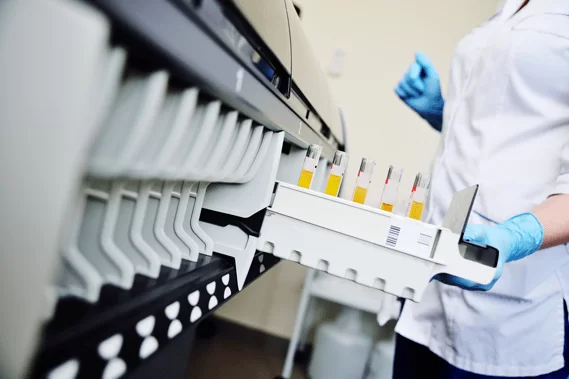
The pathology department at Princess Elizabeth Hospital in Guernsey is the only clinical chemistry laboratory on the Island serving a population of 65,000 and processing 1.2 million tests per year.
1 Challenge
The laboratory was migrating their 2 core chemistry analysers, with approximately 100 analytes to a new laboratory area but only had an 8-week window to install and validate the new analysers; as well as limited staff to facilitate this transition while maintaining continuous service.
This was deemed to be unachievable with the current validation methodology, which consisted of Excel spreadsheet-based validations that were complex, not centrally organised, and highly error-prone.
Their original plan was to perform the required analysis and use Microsoft Excel to transform and analyse the data. They knew this was going to be an onerous task in terms of resources of staff and time, but could not see any other way of achieving this objective.
2 The solution

Following a meeting at the recent IBMS conference, the laboratory decided to implement Validation Manager and utilize its native attributes (web-based, centralised, prepared templates, etc.) to consolidate the data collection and transformation of the results.
Validation Manager’s cloud-based nature allows for flexible access and seamless data management. The laboratory can utilise available data in multiple studies and effortlessly generate updated reports when new data is acquired, eliminating the hassle of redundant data entry.
What’s more, Validation Manager is highly intuitive, providing guidance in planning and executing the required analysis for both qualitative and quantitative studies. Additionally, the Validation Manager team offers prompt and comprehensive support.

3 The result

Validation Manager made the seemingly impossible possible. The laboratory could implement their clinical chemistry analysers in a much-shortened timescale; taking 8 weeks from start to finish to perform precision and comparison studies on around 100 analytes across 2 platforms and duplicate instruments. They validated the second instrument in around 75% of the time it took for the first instrument.
The ease at which data could be uploaded to Validation Manager meant the large volume of data they generated could be broken down into more manageable sections. The data and analysis were also available instantaneously; allowing them to have real-time feedback on the data being generated and for issues to be identified and resolved. This would not have been possible with the original data analysis plan.
The laboratory has already used Validation Manager for another study and — with the gained experience — could make the process more efficient. They also plan to apply Validation Manager to additional areas and for more varied studies in the future.